WholeRoll’s Guide to Tree-Free Toilet Paper: 7 Benefits and What to Look For
United States, 21st Oct 2026 - Most of us never think about where toilet paper comes from. It's just there on the roll until it isn't. Conventional toilet paper is largely made from virgin wood pulp that adds up very fast.On the other hand, bamboo toilet paper is a tree-free alternative made from bamboo, a fast-growing grass. Bamboo toilet tissue can be a more sustainable option, depending on how it is sourced, processed, and packaged.
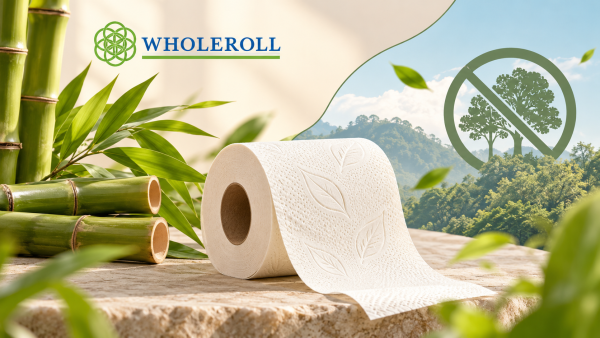
Here's what it actually does for the environment, and what to check before you buy.
What Is Tree-Free Toilet Paper?
Tree-free simply means the paper isn't made from trees. It's technically a grass, which is why it can be harvested without killing the plant or clearing a forest. Bamboo is one of the most common materials used for tree-free toilet paper, as its fibers make a soft, strong sheet.
7 Benefits of Tree-Free Toilet Paper
1. It takes pressure off forests
Traditional toilet paper often relies on virgin pulp. Tree-free paper skips that supply chain entirely.
2. Bamboo grows back fast
A tree can take decades to reach harvest size. Bamboo grows quickly – it can grow about a metre in a single day and can regenerate after harvesting. Some species grow extremely fast, while many trees used for timber have much longer growth cycles.
3. It needs fewer chemicals
Bamboo generally needs little pesticide or fertilizer, and bamboo toilet paper is made without added fragrance, dyes, or chlorine bleach. One should check the product specifications rather than assuming this from the word “bamboo.”
4. Bamboo paper breaks down quickly
Bamboo fibers are short and fine, so the paper dissolves fast in water. That's good for your septic tanks and for wastewater systems in general.
5. It's gentler on skin
Some tree-free toilet papers are designed with sensitive skin in mind, especially when they are fragrance-free and made without added dyes or lotions.
6. It can mean less packaging waste.
Some brands also reduce packaging waste by using paper-based or plastic-free packaging.
7. Some brands show you the impact
A few brands back each purchase with a measurable action. WholeRoll, for example, plants a tree with every purchase in Gulf Coast regions recovering from storms and publishes a running total, with more than 8,000 trees planted so far.
Tree-Free vs. Traditional Toilet Paper at a Glance
| Tree-Free Bamboo | Traditional Wood Pulp | |
| Fiber Source | Bamboo, a fast-growing grass | Virgin or recycled wood pulp |
| Regrowth | Regrows quickly after harvest. | Trees generally have longer growth cycles. |
| Common additives | Often none | Bleach, dyes, and fragrance are common. |
| Breakdown in water | Fast | Varies by brand and ply |
| Skin feel | Naturally hypoallergenic | Varies |
The Honest Take
Tree-free doesn't mean impact-free. Bamboo still has environmental impacts from farming, processing, and transportation, so responsible sourcing and manufacturing still matter.
FSC Certified Bamboo Toilet Paper vs. Organic Bamboo Toilet Paper
FSC certified bamboo toilet paper means the bamboo comes from sources verified by the Forest Stewardship Council, a nonprofit that sets standards for responsible forestry.
Organic describes how the bamboo was grown, without synthetic pesticides or fertilisers.
They're not interchangeable. A roll can be one, both, or neither, so check each claim separately.
How to Spot Truly Sustainable Bamboo Toilet Paper
- Look for a named certification, not just "eco friendly toilet roll"
- Choose chlorine-free or unbleached over vague words like "natural"
- Check the packaging, since plastic wrap undoes some of the benefit
- Look for specific, published numbers rather than big promises
- Confirm it's 100% bamboo, not a blend with wood pulp
Bottom Line
Tree-free toilet paper isn't completely a magic, but it's much better than virgin-pulp rolls. Don’t go with the buzzwords; look for specific certifications, and you'll know your switch is doing what it claims. Start with one pack, see how it feels, and let the label details guide the next order.
WholeRoll Toilet papers specifically fit the criteria as they are-
100% bamboo + tree-free + FSC-certified sourcing + plastic-free packaging + tree planting.
Frequently Asked Questions
Q1. Is tree-free toilet paper better for the environment?
Of course, tree-free toilet paper reduces dependency on virgin tree fibre. Though its overall environmental impact also depends on sourcing, manufacturing, packaging and transportation.
Q2. Is bamboo toilet paper septic safe?
Yes. Bamboo fibers break down quickly in water. So, they can be septic-safe, but bamboo alone doesn't guarantee it. Check that the specific product is designed and marketed as septic-safe.
Q3. Does “eco-friendly” mean the same as FSC certified?
No. “Eco-friendly” is a broad marketing phrase, while FSC certification is a specific third-party certification with defined standards.
Q4. Is organic bamboo toilet paper worth it?
Yes, organic bamboo toilet paper is made from bamboo fibers that are grown without the use of synthetic pesticides.
Q5. Is tree-free toilet paper as soft as regular?
Yes. Bamboo fibers are naturally fine and smooth, so the toilet paper made from bamboo is generally softer.
Q6. Is bamboo a sustainable crop?
Yes, Bamboo can be a renewable material because it regrows after harvest, but sustainability also depends on how it is farmed, sourced, and processed.
Company Details
| Organization: WHOLEROLL |
| Contact Person Name: Letrece Harris |
| Website: https://www.wholeroll.com/ |
| Email: letreceharris@wholeroll.com |
| Country: United States |